
Group Tour Operator Software: How to Choose the Right Platform (2026 Buyer’s Checklist)
November 13, 2026
Read More
Tour costing is the process of adding up every supplier cost behind a group tour and turning it into an accurate cost per traveler. It sounds simple. Then the coach rate changes, three travelers drop out, and the hotel’s comp policy turns out to be different than you remembered.
For many tour operators, costing still lives in a spreadsheet full of formulas that only one person truly understands. Every revision means re-checking rates, re-dividing group costs, and hoping nothing broke along the way. As Arival notes in its guide to tour pricing, operators often set prices based on what competitors charge or on what they think customers will pay. Starting from your real costs puts every quote on firmer ground.
A clear tour costing process protects your margin, speeds up proposals, and gives your team the confidence to quote without second-guessing every number.
Tour costing is calculating the true cost of delivering a tour (per-person costs, group costs, complimentary travelers, fees, and contingency) before you set a selling price. Tour pricing is the next step: adding profit and deciding what the client actually sees.
Keeping the two separate matters. Costing tells you what the trip costs you to run. Pricing tells you what you will charge. When they get blended together in one spreadsheet cell, it becomes hard to see whether a tour is truly profitable — or just busy.
A reliable tour costing process follows the same steps every time: gather current rates, separate cost types, account for comps, set a break-even group size, add protection and profit, and re-cost when anything changes.
Every costing is only as accurate as the rates behind it. An expired hotel rate or last season’s attraction price can quietly follow a trip all the way into the final invoice.
Before you build a costing, gather current rates for:
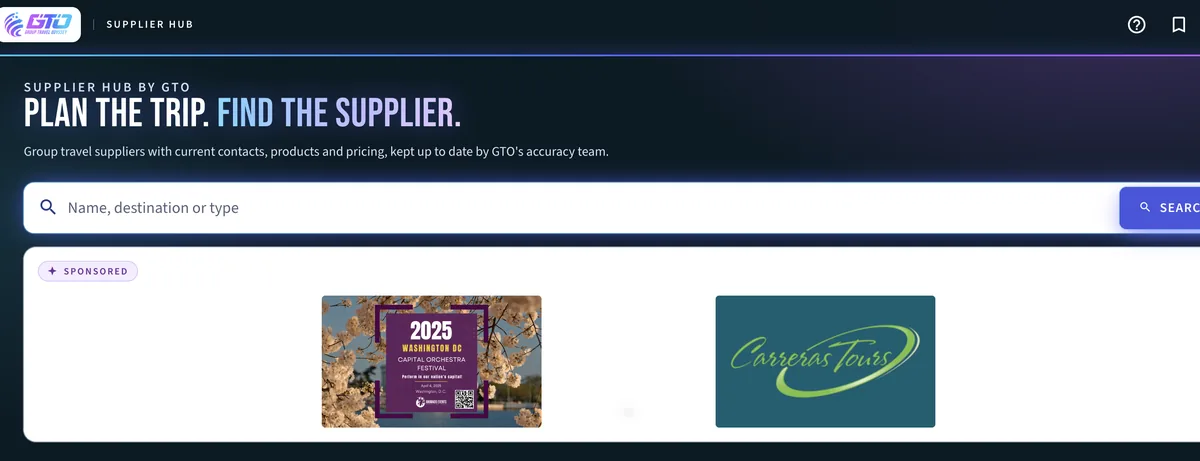
A centralized supplier resource makes this step much faster. Supplier Hub by GTO lists 30,000+ group suppliers, including hotels, attractions, restaurants, transportation, and guides, with current contacts, products, and group rates kept up to date by GTO’s accuracy team. It is free to join at gtosupplierportal.com. Always confirm final rates and availability directly with the supplier before you quote, but you begin from a much stronger starting point than an old email thread.
For more on requesting rates and getting terms in writing, see Group Rates for Tour Operators: How to Find, Verify and Keep Them Current. For keeping supplier records organized once you have them, read Supplier Management for Tour Operators.
This is the heart of tour costing. Some costs rise with every traveler you add. Others stay the same whether 20 or 45 people board the coach.
Group costs get divided among paying travelers. That is why the same itinerary can carry very different per-person prices at different group sizes — and why a single “price per person” with no group size attached is really just a guess.
Tour directors, drivers, group leaders, and chaperones all have costs, even when they do not pay. Their rooms, meals, and admissions have to be covered by the paying travelers.
Some suppliers offer complimentary rooms, meals, or tickets based on group size, and those comps can offset part of the cost. Policies vary widely, so record each supplier’s comp terms with its rates instead of relying on memory. Then decide in advance whether a comp reduces your cost or goes to the group leader.
Forgetting non-paying travelers is one of the fastest ways to turn a profitable tour into a break-even tour.
Your break-even group size is the minimum number of paying travelers needed to cover all costs. Below that number, every group cost gets spread across fewer people and your margin disappears.

Base the tour price on break-even. If you have at least one season of history, last year’s average occupancy is a useful guide. For group tour operators, that means looking at how many travelers you typically end up with, not just how many the group leader hopes to bring.
One common approach is price tiers (for example, one price for 30 to 34 paying travelers and a lower price for 35 to 39). Whatever approach you choose, state the group size your price is based on in the proposal.
Once your true cost per paying traveler is clear, layer on the items that protect the business:
That last point deserves attention, because markup and margin are not the same thing. Markup is profit as a percentage of cost. Margin is profit as a percentage of the selling price. As the Corporate Finance Institute explains, an item that costs $100 and sells for $125 has a 25% markup but only a 20% gross margin. If your team says “20%” without agreeing on which one they mean, two people can price the same tour differently.
A tour costing is not finished when the proposal goes out. Passenger counts shift, suppliers update rates, and itineraries evolve.
Re-cost whenever:
The goal is simple: the price your client approved should still reflect the trip you are actually operating.
The basic tour costing formula is: cost per paying traveler = per-person costs + (group costs ÷ number of paying travelers). To price with a target margin, divide that cost by (1 − your margin).

Here is how group size changes the math, using hypothetical numbers for illustration only: $500 in per-person costs and $6,000 in group costs.
| Paying travelers | Group cost share | Cost per paying traveler |
|---|---|---|
| 20 | $300 | $800 |
| 30 | $200 | $700 |
| 40 | $150 | $650 |
Same itinerary. Same suppliers. The difference? $150 per traveler between 20 and 40 paying travelers, before you add a dollar of profit. That is why group size belongs on every quote.
Now add profit. At 30 paying travelers, a 20% target margin means $700 ÷ 0.80 = $875 per traveler. That is $175 of profit per person: 20% of the $875 selling price, or a 25% markup on the $700 cost.
Most tour costing errors are not dramatic. They are small, repeated, and easy to miss in a crowded spreadsheet.
Each of these mistakes comes from the same place: information that lives in too many places and depends on someone remembering to check it. The same duplicate entry eats time across the rest of the operation, too. Tour Operations: How to Save 10 Hours Every Week walks through where those hours usually go.
Tour operator software improves tour costing by keeping supplier rates, trip details, and passenger counts connected, so a change in one place does not require a manual rebuild somewhere else.
When costing lives in a disconnected spreadsheet, every update depends on someone copying the right number into the right cell. A connected platform works differently.
Supplier Hub by GTO is free to join at gtosupplierportal.com. It lists 30,000+ group suppliers, including hotels, attractions, restaurants, transportation, and guides, with current contacts, products, and group rates kept up to date by GTO’s accuracy team, so a costing can start from current information instead of a buried inbox.
Proposal Builder creates professional, customized proposals using current supplier information, pricing, and your own templates. The quote the client sees can stay tied to the same rates and group size you used in the costing.
Trip Management keeps itineraries, reservations, supplier confirmations, rooming lists, and passenger information together, which helps when you need to re-cost after a change. Payment Tracking covers deposits, balances, invoices, and traveler payments, and Reporting & Analytics adds insight on revenue, bookings, passenger counts, and supplier usage.
The result is not software that sets your prices for you. Your team’s judgment still matters. It means your team spends less time hunting for rates and re-checking formulas, and more time building tours that are priced right from the start.
If you are comparing platforms, our group tour operator software buyer’s checklist lists the questions worth asking.
Related Reading: Tour Operator Software: Break Free From Spreadsheets | Group Travel Technology: What’s Next
Tour costing is calculating the total cost of operating a tour, including per-person costs, group costs, complimentary travelers, fees, and contingency, and converting it into a cost per paying traveler. It comes before pricing, which adds profit to set the final selling price.
Tour costing determines what a tour costs you to deliver. Tour pricing determines what you charge the client, based on that cost plus profit, commissions, and market factors. Keeping the two steps separate makes it easier to see whether each tour is actually profitable.
Add all per-person costs, then divide the total group (fixed) costs by the number of paying travelers and add that share. Include the costs of non-paying travelers such as the driver and tour director. The result is your cost per paying traveler before profit.
Markup is profit as a percentage of cost, while margin is profit as a percentage of the selling price. For example, a $100 cost sold at $125 is a 25% markup but a 20% margin. Choose one method and use it consistently across your team.
Re-cost a tour whenever the paying passenger count, room occupancy, suppliers, transportation, or travel dates change, and confirm rates again before final invoicing. Group costs are shared among paying travelers, so even small changes in group size can shift the cost per person.
Accurate tour costing starts with accurate information: current rates, the right group size, and one place where your whole team can see both. Group Travel Odyssey is built for group travel professionals and helps your team manage sales, operations, suppliers, passengers, and more within one connected platform. Access is opening in stages.
Spend less time chasing rates and more time building extraordinary tours.
Join the waitlist for early access, launch updates, and your invitation when GTO is ready for your team. There is no cost and no commitment to join.
Looking for something specific? Search our tour operator guides.
Quick self-check
How many systems are you really running?
Check any that sound familiar.
Join the WaitlistNovember 13, 2026
Read MoreNovember 13, 2026
Read MoreNovember 3, 2026
Read MoreSeptember 13, 2026
Read MoreSeptember 10, 2026
Read More